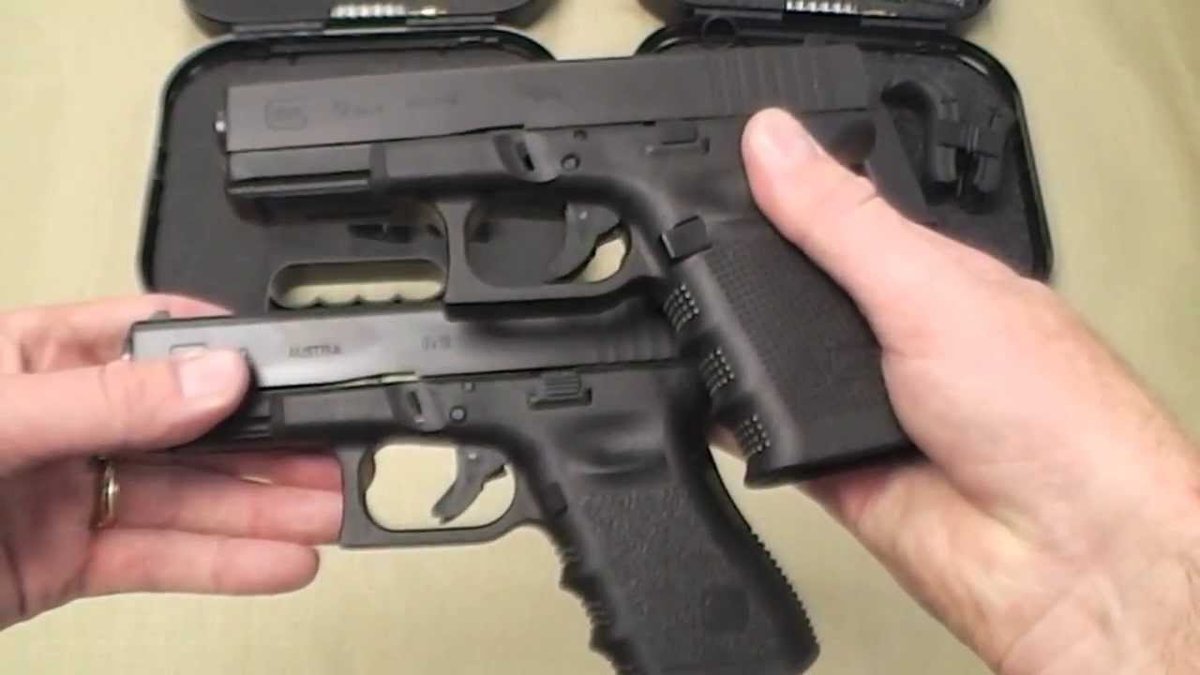
The Glock Gen 3 isn't just a handgun; it's a foundational pillar in the modern firearms landscape, a workhorse that redefined reliability, and for many, the quintessential "Glock" experience. While newer generations have emerged with their own innovations, the Gen 3 continues to command respect, curiosity, and a fiercely loyal following. Delving into its performance, legendary reliability, and unique shooting experience reveals why this generation remains a go-to for countless shooters, from seasoned veterans to those looking for a robust platform to build upon.
At a Glance: The Enduring Appeal of the Glock Gen 3
- Iconic Design: The first Glock to feature an accessory rail and prominent finger grooves, defining an era.
- Unmatched Reliability: Known for its "Glock Perfection" ethos, performing consistently under harsh conditions.
- Massive Aftermarket Support: The most extensive ecosystem of parts and accessories for customization.
- Affordable Workhorse: Often the most budget-friendly option, making it an ideal choice for both first-time owners and serious customizers.
- Still Widely Produced: Particularly relevant for markets like California, where it remains on the approved roster.
- Practical Performance: While not featuring the latest barrel or recoil system, its practical accuracy and manageable shooting experience hold up remarkably well.
The Genesis of a Legend: How the Gen 3 Came to Be
To truly appreciate the Glock Gen 3, you have to understand the path that led to its creation. Gaston Glock's venture into firearms began in the 1980s with a revolutionary polymer-framed pistol designed for the Austrian military, leading to the legendary Glock 17. This Gen 1 model, known as the Pistole 80 (P80), was a stark departure from traditional handgun designs, emphasizing simplicity, high capacity, and a lightweight frame.
By 1988, Glock introduced the Gen 2, which refined the original design by adding checkering to the front and back straps for improved grip retention. This generation also saw the introduction of popular models like the compact Glock 19 and expanded caliber offerings, including .40 S&W, 10mm, and .45 ACP, alongside the subcompact "Baby Glocks." These were crucial steps, cementing Glock's place in the global firearms market.
Then came 1998, and with it, the Glock Gen 3. This iteration wasn't just a subtle refinement; it was a significant evolution that addressed user feedback and anticipated future trends. The most immediately noticeable additions were the accessory rail (Glock's first!), allowing for lights and lasers, and the controversial, yet distinctive, finger grooves on the grip. A small thumb rest and a loaded chamber indicator also became standard. These changes propelled the Gen 3 into an era of widespread adoption, not just by law enforcement and military units but also by an ever-growing civilian market. It quickly became the benchmark for reliability and a platform ripe for customization.
Deconstructing the Gen 3: Features That Define It
The Gen 3 is a product of its time, incorporating innovations that were cutting-edge in the late 90s, while retaining the core "Glock Perfection" philosophy. Let's break down its defining characteristics:
The Grip: Finger Grooves and Classic Texture
Perhaps the most talked-about feature of the Gen 3 is its finger-grooved grip. These three prominent grooves, designed to promote a consistent hand placement, proved to be a divisive addition. For some shooters, they fit like a glove, offering a comfortable and secure hold. For others, particularly those with larger or smaller hands, the grooves could feel restrictive, forcing an unnatural grip. Despite the debate, this design element is instantly recognizable and a hallmark of the Gen 3. The grip texture itself is a more traditional, smoother polymer compared to the Rough Textured Frame (RTF) of the Gen 4.
Standard Controls: Simplicity and Familiarity
The Gen 3 adheres to Glock's minimalist control scheme. It features a standard, non-reversible magazine release button, which is perfectly functional but smaller than the ambidextrous, reversible option introduced in Gen 4. The slide stop lever is also standard and not ambidextrous, meaning it's primarily designed for right-handed shooters. This simplicity means fewer moving parts and a straightforward user interface, which many shooters appreciate.
Recoil System: The Robust Single Spring
Unlike its Gen 4 and Gen 5 successors, which utilize a dual recoil spring assembly, the Gen 3 employs a single recoil spring assembly. This system is robust, tried, and true. It contributes to the Gen 3's reputation for unwavering reliability and is incredibly simple to field strip and reassemble. While some argue that a dual spring system offers better recoil absorption and a longer service life, the Gen 3's single spring has proven itself remarkably durable over decades of use.
Finish and Barrel: Enduring Quality
The Gen 3 slide typically boasts a Tenifer or nitride treatment, known for its exceptional hardness and corrosion resistance. This finish gives the slide its characteristic matte black look and contributes significantly to the pistol's longevity. Inside, you'll find Glock's polygonal rifling barrel (the Gen 1-4 profile). This barrel design, lacking traditional lands and grooves, is celebrated for its ease of cleaning and excellent bullet sealing, which can translate to slightly higher muzzle velocities and good practical accuracy.
The Accessory Rail: A Game-Changer
A monumental leap for the Gen 3 was the introduction of the universal accessory rail (often called the "Glock rail"). This feature, conspicuously absent from Gen 1 and Gen 2 models, allowed shooters to easily mount tactical lights, lasers, and other accessories. This opened up new possibilities for personal defense, law enforcement, and recreational shooting, firmly placing the Gen 3 in the modern tactical handgun category.
Other Noteworthy Features:
- Loaded Chamber Indicator: A small cutout on the extractor allows the shooter to visually and tactically confirm if there's a round in the chamber.
- Standard Magwell: Like the Gen 4, the Gen 3 has a standard, non-flared magwell. While perfectly functional, it requires a bit more precision for rapid reloads compared to the flared magwell of the Gen 5.
- No Front Serrations: The slide lacks the front serrations (FS) found on some Gen 5 variants, meaning slide manipulation is primarily done via the rear serrations.
Glock Gen 3 Performance: Hitting the Mark
When we talk about the performance of a handgun, we're looking at a combination of factors: accuracy, trigger feel, recoil management, and overall shootability. The Gen 3, while not always boasting the latest technical advancements, delivers a solid, dependable performance profile.
Accuracy: Consistent and Practical
The Gen 3's polygonal rifling barrel is known for consistent accuracy. While target-grade precision might be more associated with competition-tuned firearms, a stock Gen 3 is more than capable of producing excellent groups for duty, self-defense, and range practice. The smooth bore-like profile offers good bullet stability, and many shooters find it very forgiving. For most practical applications, the Gen 3's accuracy is well beyond sufficient. The "Glock Marksman Barrel" of the Gen 5 might offer incremental improvements in bench-rest accuracy, but in real-world shooting, much of a pistol's accuracy comes down to the shooter's skill, not marginal differences in barrel design.
Trigger Pull: The Quintessential Glock Feel
The Gen 3 features the classic Glock trigger: a safe-action mechanism with a consistent, albeit somewhat spongy, pull that breaks crisply enough for defensive use. It typically has a predictable take-up, a clear wall, and a distinct reset. While not a match-grade trigger out of the box, it's reliable, safe, and easily tunable. The aftermarket for Glock triggers is vast, and many Gen 3 owners choose to swap out connectors, springs, and even entire trigger shoes to fine-tune the pull to their preference. This modularity contributes significantly to its performance versatility.
Recoil Management: Simple and Effective
The single recoil spring assembly of the Gen 3 handles recoil effectively. In 9mm, the recoil impulse is generally soft and manageable. In larger calibers like .40 S&W or .45 ACP, the recoil is more pronounced, but still predictable. Compared to the dual recoil spring of the Gen 4 and Gen 5, some shooters report that the Gen 3 feels a bit "snappier" or has a slightly different recoil impulse. However, many find the difference negligible for practical shooting, and the simplicity of the single spring is often preferred for its proven track record. Ultimately, proper grip technique and stance play a far larger role in managing recoil than minor differences in recoil spring design.
The Unyielding Beast: Glock Gen 3 Reliability
If there's one word synonymous with Glock, it's reliability. And the Gen 3 is a prime example of this ethos. It earned its reputation through widespread adoption by law enforcement and military agencies globally, performing in some of the most demanding conditions imaginable. This is where the Gen 3 truly shines and why it remains a benchmark.
"Glock Perfection" in Action
The Gen 3 embodies the "Glock Perfection" mantra: simple, durable, and unfailingly functional. Its design prioritizes operational consistency. The minimal number of parts, robust construction, and generous tolerances contribute to a pistol that cycles reliably with a wide variety of ammunition, often shrugging off dirt, grime, and neglect that would jam other firearms. This makes it an ideal choice for self-defense, duty, or any situation where lives may depend on the firearm's ability to go bang every single time.
Durability: Built to Last
The polymer frame, Tenifer/nitride-treated slide, and high-quality internal components are engineered for extreme longevity. These pistols are known to absorb tens of thousands of rounds with minimal wear and tear. While some concerns have been raised about the thinner lug holding the recoil assembly in Gen 4 and Gen 5 models potentially impacting long-term durability compared to the Gen 3, this remains largely anecdotal and often only relevant under extreme, high-round count scenarios. For the average shooter, a Gen 3 Glock will likely outlive its owner.
The Single Recoil Spring's Role
The single recoil spring system of the Gen 3 is a testament to its reliability. It's a proven design that works consistently. Unlike more complex systems, there are fewer potential points of failure. This simplicity is often cited by traditionalists as a reason for their continued preference for the Gen 3, viewing it as less prone to issues that might arise with multi-part components.
Aftermarket Mods and Perceived Reliability
A common misconception is that aftermarket parts inherently make a Glock less reliable. In truth, many perceived reliability issues with Glocks, across all generations, often stem from poorly installed or incompatible aftermarket components. When choosing to customize your Gen 3, it's crucial to select reputable parts and ensure proper installation. A stock Gen 3, however, is almost universally regarded as a paragon of reliability.
A Familiar Feel: The Glock Gen 3 Shooting Experience
Shooting a Gen 3 Glock is a distinct experience, shaped by its ergonomic profile, the unique feel of its recoil, and its inherent simplicity. It’s a firearm that many return to, often after experimenting with newer, more feature-rich options.
The Finger Groove Effect
The shooting experience is heavily influenced by those prominent finger grooves. For those whose hands align well with them, the grip feels incredibly secure, almost locking the hand into place. This can enhance control and reduce perceived muzzle flip. However, for others, the grooves can feel awkward, leading to discomfort or an unnatural grip that hinders quick target acquisition and follow-up shots. Trying before buying, if possible, is always recommended to see how the Gen 3’s grip meshes with your individual hand anatomy. Many find that with consistent practice, they adapt to the grooves, or conversely, that the grooves are a permanent deal-breaker.
Recoil Impulse and Muzzle Flip
Given its polymer frame and robust design, the Gen 3 offers a predictable and manageable recoil impulse. In 9mm, it's generally a pleasant shooter. The single recoil spring provides a consistent feel, and while it might not be as "soft" as some lighter-recoiling dual spring setups, it's far from punishing. Muzzle flip is also well-controlled, especially with a firm, two-handed grip. Shooters often describe the Gen 3 as having a no-nonsense, straightforward feel—it just works.
Pointability and Ergonomics
Despite its blocky appearance, Glocks are often described as being "pointable," meaning they naturally align with the shooter's line of sight. The Gen 3 continues this tradition. The simple, uncluttered slide and sight picture contribute to quick target acquisition. While the grip angle is a point of contention for some who are used to 1911-style ergonomics, most shooters adapt quickly, finding the Gen 3 to be a natural extension of their hand.
For those who appreciate the classic Glock feel, the Gen 3 offers an experience that is both familiar and reassuring. It's a pistol that doesn't try to be overly fancy; it just focuses on delivering rounds accurately and reliably, time after time.
The Customizer's Dream: Why Gen 3 Dominates the Aftermarket
One of the most compelling reasons to choose a Glock Gen 3 today, even with newer generations available, is its unparalleled aftermarket support. The Gen 3 boasts the largest and most diverse ecosystem of parts and accessories of any Glock generation, making it the ultimate blank canvas for customization.
An Ocean of Options
Because the Gen 3 has been in production for so long and sold in such massive quantities globally, virtually every conceivable upgrade or modification is available. Want a new trigger? There are dozens of options. Looking for custom sights? Hundreds. Need a threaded barrel, an extended slide release, a different recoil spring weight, or even a completely new frame? The Gen 3 has it all. This extensive selection means you can truly tailor the pistol to your exact preferences, whether for competition, concealed carry, or just plain fun.
Ease of Modification
Glocks, in general, are known for their modularity and ease of disassembly, and the Gen 3 is no exception. Swapping out internal components, installing new sights, or replacing parts is relatively straightforward for anyone with basic mechanical aptitude and the right tools. This makes the Gen 3 an excellent platform for learning about handgun mechanics and personalizing your firearm without needing a gunsmith for every modification.
A Budget-Friendly Starting Point
Often, Gen 3 Glocks are the most affordable option on the market, especially on the used market. This lower entry cost makes them particularly attractive for individuals who intend to heavily modify their pistol. Instead of paying a premium for a newer generation with features you might immediately replace (like the trigger or sights), you can invest less upfront in a Gen 3 and allocate more of your budget towards the exact aftermarket components you desire. It truly is the "hot rod" of the Glock family. For those keen to dive deeper, you can Learn about Glock Generation 3 through its various models and customization possibilities.
Glock Gen 3 vs. Its Descendants: Still Relevant?
With the Gen 4 and Gen 5 Glocks on the market, a natural question arises: is the Gen 3 still a viable choice? The answer, unequivocally, is yes – but it depends on your priorities.
Gen 3 vs. Gen 4: Ergonomics and Recoil Refinements
The Gen 4 (introduced in 2010) brought significant updates: a larger, reversible magazine release, a modular backstrap system (allowing grip size adjustment), and a dual recoil spring assembly for reduced felt recoil and increased service life. While the Gen 4 retained the finger grooves, its RTF (Rough Textured Frame) grip offered a much more aggressive texture. For shooters who disliked the Gen 3's finger grooves or wanted to fine-tune grip size, the Gen 4 was a considerable upgrade. However, the Gen 3's single recoil spring is seen by some as more robust, and its aftermarket reigns supreme. The Gen 4 has since been discontinued for general sale, though still produced for law enforcement.
Gen 3 vs. Gen 5: The Pinnacle of Refinement?
The Gen 5 (released in 2017) represents the latest major evolution, born partly from feedback from the FBI's Project M. It removed the finger grooves entirely, introduced an ambidextrous slide stop, a flared magwell, an improved trigger, and the Glock Marksman Barrel (GMB) for enhanced accuracy. The nDLC finish is also a notable upgrade. For those seeking the most refined stock shooting experience, better accuracy out-of-the-box, and ambidextrous controls, the Gen 5 is arguably superior.
However, the Gen 3 still holds its own. Its lack of a flared magwell and front serrations might seem dated, but its simplicity is part of its charm. Some users have anecdotally reported that the Gen 5's GMB can be less forgiving with reloaded ammunition compared to the older polygonal barrels, though this isn't a universal experience. The biggest factor is often nostalgia, the "classic" Glock aesthetic, and that vast aftermarket ecosystem.
The California Factor: A Lasting Legacy
One of the most significant reasons for the Gen 3's continued relevance is its availability in restricted markets like California. Due to specific state regulations regarding new handgun sales, many newer Glock generations are not on California's approved handgun roster. The Gen 3, however, remains widely available, making it the primary choice for new Glock buyers in the state. This sustained demand ensures its continued production and robust parts availability.
Ultimately, the Gen 3 is not "outdated" but rather a foundational design that continues to offer excellent performance and reliability. It's a testament to the fact that sometimes, the simplest and most proven designs stand the test of time.
Common Questions About the Gen 3 Glock
Let's address some of the persistent queries surrounding this iconic pistol.
Is the Gen 3 Glock outdated?
No, "outdated" isn't the right word. While newer generations feature modern refinements like modular backstraps, ambidextrous controls, and enhanced barrels, the Gen 3 remains a highly functional, reliable, and capable firearm. Its design is proven, and its performance for practical purposes holds up remarkably well. It's more of a classic than an antique.
Are the finger grooves really that bad?
This is highly subjective. For some, the finger grooves fit perfectly, providing a secure and comfortable grip. For others, they force an unnatural hand position that can be uncomfortable or hinder control. It truly depends on your hand size and shape. The best way to know is to try holding one yourself. Many Gen 3 owners who dislike the grooves will modify them or opt for custom stippling.
Is the Gen 3 as accurate as a Gen 5 with the Marksman Barrel?
For most shooters in practical scenarios, the difference in accuracy between a Gen 3 (polygonal rifling) and a Gen 5 (Glock Marksman Barrel) will be negligible. While the GMB is designed for enhanced precision, the accuracy potential of a Gen 3 is still excellent, and the shooter's skill is usually the biggest variable.
What's the best Gen 3 Glock model?
This depends entirely on your intended use.
- Glock 17 (9mm): Full-size, duty-oriented, excellent for home defense or open carry.
- Glock 19 (9mm): Compact, versatile, widely popular for concealed carry, home defense, and range use. Often considered the "do-it-all" Glock.
- Glock 26 (9mm): Subcompact, excellent for deep concealment.
- Glock 22 (.40 S&W): Full-size, powerful, popular with law enforcement.
- Glock 23 (.40 S&W): Compact .40 S&W, similar versatility to the G19.
Your choice should align with your specific needs.
Is the single recoil spring inferior to the dual recoil spring?
Not necessarily. The single recoil spring in the Gen 3 is a proven design known for its simplicity and robustness. While the dual recoil spring (Gen 4/5) is designed to better absorb recoil and potentially extend service life for very high round counts, many shooters prefer the feel and proven reliability of the Gen 3's single spring. Both systems are highly reliable.
Who Should Consider a Glock Gen 3?
The Gen 3 isn't for everyone, but for certain individuals, it remains an outstanding choice.
- The Customization Enthusiast: If you view a pistol as a canvas for modification, the Gen 3 is your ultimate starting point. Its vast aftermarket support means you can transform it into almost anything you desire, from a competition gun to a personalized everyday carry (EDC).
- The Budget-Conscious Buyer: Often available at a lower price point than newer generations, the Gen 3 offers incredible value without compromising on reliability or performance. It’s an accessible entry into the Glock family.
- The Traditionalist: For those who appreciate the classic Glock aesthetic, the simplicity of its controls, and the proven track record of its original designs (pre-Gen 4 modularity), the Gen 3 embodies the "Glock Perfection" they've always known.
- California Residents: Due to state regulations, the Gen 3 is often the only modern Glock available for new purchases, making it a default and excellent choice for shooters in California.
- New Shooters (with caveat): Its straightforward operation and legendary reliability make it a safe and dependable first handgun. The only caveat is ensuring the finger grooves fit comfortably.
- Anyone Needing a Dependable Workhorse: If you need a pistol that you can trust your life with, that will perform in all conditions, and that requires minimal fuss, the Gen 3 fits the bill perfectly.
Making the Right Choice: Your Next Steps with a Gen 3 Glock
The Glock Gen 3 stands as a monumental achievement in handgun design, a testament to reliable engineering, and a platform that continues to inspire loyalty and innovation. Its performance is practical and consistent, its reliability is legendary, and its shooting experience, while distinct, is embraced by countless enthusiasts.
If you're considering a Gen 3 Glock, whether new or used, here's your actionable next step:
- Get Hands-On: If possible, find a range or gun store where you can physically hold and even shoot a Gen 3 Glock. Pay close attention to how the finger grooves fit your hand. This is often the biggest deciding factor.
- Define Your Purpose: What will this Glock be used for? Concealed carry, home defense, range shooting, or a custom project? Your purpose will guide which model (G17, G19, G26, etc.) and what modifications, if any, you might want to consider.
- Explore the Aftermarket: If customization is a goal, immerse yourself in the vast aftermarket options. Research triggers, sights, barrels, and grip enhancements to see the incredible potential of this platform.
- Consider Your Budget: Factor in not just the pistol's cost but also ammunition, training, and any desired accessories or modifications. The Gen 3's affordability often leaves room for quality upgrades.
The Glock Gen 3 is far from a relic of the past. It's a living legend, a reliable companion, and a versatile tool that continues to serve shooters across the globe with unwavering confidence. For those who understand and appreciate its unique blend of features, it remains an indispensable part of their firearms collection.